

Most Honda owners inherit a maintenance plan they never chose. Maybe it came from a parent, a previous owner, or a sticker on the windshield that says 3,000 miles because that was true in 1998. Then life happens, the commute changes, and the plan quietly stops matching the car in your driveway.
You don’t need a stricter schedule. You need one built around how you actually drive. A Honda that sits in Tulare heat for six hours a day and gets short trips to the grocery store has different needs than one cruising Highway 99 to Fresno every morning. Same badge, different maintenance reality.
Here’s the thing: your owner’s manual already gives you the baseline. The hard part is translating that baseline into something you’ll actually follow. Look at routine Honda maintenance services in Visalia, and you’ll see the menu covers fluid changes, brakes, tires, and inspections. That menu exists for a reason, and this guide is about ordering it sensibly for your car and your week.
Why the “Severe Driving” Label Probably Applies to You
Flip through Section 8 of almost any Honda manual and you’ll find two schedules: normal and severe. Most owners skim past it and assume they’re in the normal camp, because they aren’t towing a boat or racing at Laguna Seca.
But read the severe checklist and count how many apply to you. Short trips under five miles? Frequent stop and go through Visalia traffic? Summer temperatures that bake the pavement by 9 a.m.? Each one pushes you toward the shorter interval. Combine two or three, and you should be using the severe schedule whether or not you broke a sweat getting there.
That matters because oil chemistry degrades on short trips even when the odometer barely moves. The engine never fully warms up, moisture lingers in the crankcase, and the 10,000-mile assumption stops being safe. My take: if you’re honest with yourself, most readers of this article land in severe. The normal schedule is a highway commuter’s luxury.
Build Your Four-Part Maintenance Calendar
Forget a single service date. Use four overlapping rhythms, and the whole thing gets easier to remember.
- Monthly, ten minutes: check tire pressure, walk around with a flashlight for bulbs, and glance at fluid levels.
- Every other oil change: rotate tires and have the brake pads measured.
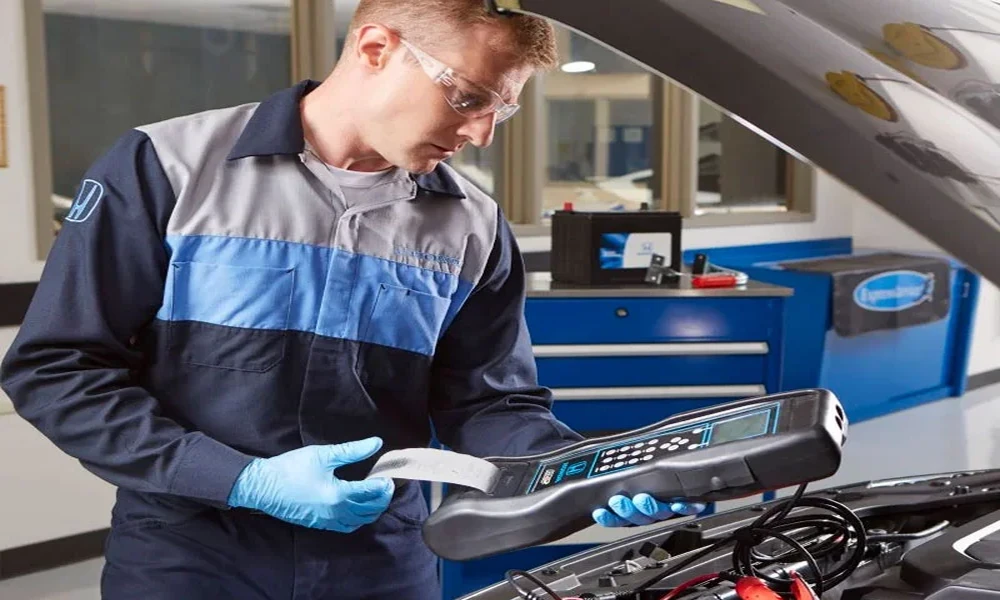
- Seasonal, before summer and winter: battery load test and air filter check. Central Valley heat is brutal on batteries, and so is a cold morning in the foothills.
- Annual: full multi-point inspection with alignment and suspension checked.
Write these on a paper calendar in the kitchen or put them in your phone with reminders two weeks early. The reminder matters more than the calendar entry, because it gives you time to book a Saturday appointment instead of scrambling on a Tuesday.
What the Odometer Milestones Actually Cover
Your Honda’s major services cluster around a few rough milestones, and knowing what lands where keeps you from saying yes or no on the spot at the counter.
| Milestone | Typical Focus | What You Should Ask |
|---|---|---|
| 15,000 to 30,000 | Oil and filter, tire rotation, cabin and engine air filters | Are filters genuinely restricted, or just dusty? |
| 60,000 | Transmission fluid, spark plugs on some models, brake fluid | Which item is time-based rather than mileage-based? |
| 100,000+ | Timing belt or chain inspection, coolant, suspension bushings, hoses | Is this wear or a scheduled replacement? |
Two things drive these intervals: miles and years, whichever comes first. A 2018 Civic with 30,000 miles still needs attention to fluids and belts because time does its own work. That’s the part most people miss, especially in households with a second car that only leaves the garage on weekends.
Fluids Deserve More Respect Than You Give Them
Ask a mechanic what causes the expensive repairs they see and you’ll hear about neglect, not hard driving. Engine coolant that runs past its service life turns acidic and starts eating gaskets. Brake fluid absorbs moisture and quietly raises the boiling point until a hard stop down a mountain grade gets scary.
Stay on Honda’s specified intervals for coolant, brake fluid, and transmission fluid, and hold off on the additives. The chemical packages are already blended for the job. Extra products can throw off the balance the engineers spent years developing.
Watch the Brakes and the Air in That Order
Brake pads take the hardest beating on short trips, because you use them constantly and rarely get them hot enough to shed dust and moisture. Listen for a metallic squeal when you’re braking and don’t ignore a soft pedal or a car that pulls under hard stops. Those are signs to get it inspected, not signs to turn up the radio.
Keep your tires topped up and rotate them on schedule. Under-inflated tires cost you fuel and wear unevenly, and the difference shows up fast in summers that regularly top 100 degrees. According to the Environmental Protection Agency, proper tire inflation supports better fuel economy, which is a nice bonus next to the safety angle.
A Weekend Checklist You Can Run in Ten Minutes
Before you book anything, spend a few minutes on the car yourself. This gives you a baseline and makes conversations at the service counter much sharper.
- Pull the dipstick, wipe it, and reinsert it, then read both sides.
- Check tire pressure in the morning when tires are cold, including the spare.
- Test every light against a wall or garage door.
- Look under the car for drips, and sniff for a sweet smell near the front.
- Start the engine and listen for a new rattle, then check the wiper blades for streaks.
Snap photos of anything odd. A photo of a dark drip on your driveway gives a technician more to go on than a vague description, and it’s the kind of detail that saves you a return visit.
EV, Hybrid, or Gas: The Rhythms Are Different
Hybrids and EVs reduce or remove oil changes and brake wear, since regenerative braking does a lot of the stopping. That doesn’t make them maintenance-free. Tires still wear, cabin filters still clog with valley dust, coolant loops still need attention, and the brake calipers can seize from lack of use. A Prologue or an Accord Hybrid needs a different checklist, not a shorter one.
The Department of Energy publishes plain-language guidance on how electrified drivetrains differ in upkeep, and it’s worth a read before you assume an EV means you’re off the hook.
One habit carries over to every powertrain: check for open safety recalls at least twice a year. According to the National Highway Traffic Safety Administration, recall repairs are free, and a quick VIN search takes less than a minute. Skipping it is the cheapest mistake to avoid and the easiest to forget.
The Part Most People Get Backwards
Budget for maintenance like a subscription, not an emergency. Set aside a flat monthly amount and let it sit. When the 60,000-mile service arrives, you pay from that bucket instead of flinching at a number on a screen. Owners who do this tend to approve the recommended work instead of deferring it, and deferring is where small costs turn into big ones.
Put Your Schedule on Paper This Week
You now know the two schedules, the four rhythms, the milestones worth remembering, and the checks you can do on a Saturday morning. Pick your interval based on real driving, not habit. Mark your next three service dates with two-week reminders.
Start with your current mileage and your manual, and if the two don’t line up, let a Honda-trained tech help you sort it out. Here’s a simple question to settle it: what did the last six months of driving actually look like? If the answer involves short trips, stop and go traffic, or a hot valley summer, your car has been telling you something. You just need to listen, book the appointment, and keep the records in the glovebox.