

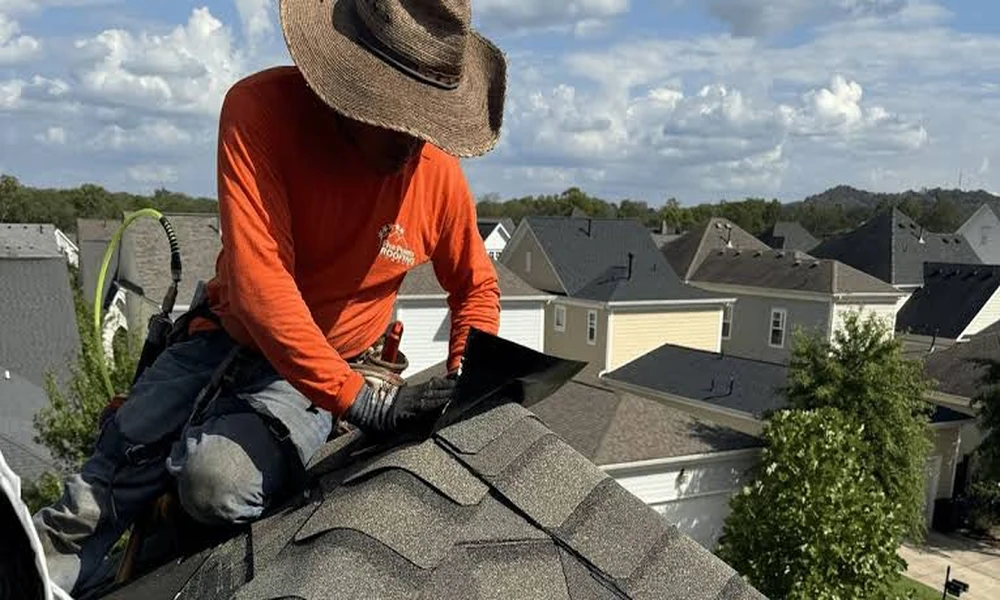
Three repair calls in eighteen months is the number that should worry you, not the age of your shingles. I have watched neighbors in Hamblen County sink two thousand dollars into patches on a roof that was already finished, and the third leak landed in the same ceiling stain as the first. Roofs do not fail politely. They give you hints for a year or two, then they quit on a Tuesday night during a thunderstorm.
The trick is reading those hints early enough to choose your timing instead of having it chosen for you. This guide walks through what actually signals the end of a roof, why East Tennessee weather accelerates the clock, and what a replacement looks like from the first phone call to the final magnet sweep.
Your Roof Is Trying to Tell You Something
You do not need to climb a ladder to get useful information. Start in the attic with a flashlight after a hard rain. Water stains on the underside of the decking, dark streaks running down rafters, or insulation that feels damp in one corner while the rest is dry all point to a roof that is letting moisture past the outer layers. That moisture does not stay in the attic. It soaks into framing, feeds mold, and softens the structural wood your whole house sits on.
Then look up at the roof from the yard, ideally with binoculars, on a dry day. Curling, clawing, or missing shingles on the south and west slopes are the classic first casualties. Granules piling up in your gutters look like coarse black sand, and they mean your shingles are shedding the layer that defends against UV damage. Bald patches on asphalt are not cosmetic. They are exposed matting, and matting is the beginning of the end.
One more thing worth checking yourself: hail bruising. After a storm rolls through, run your hand across a shingle tab. Bruised shingles feel soft and dimpled, like a bruised apple, even when they look fine from ten feet away. Most homeowners miss it. Insurance adjusters do not.
What East Tennessee Weather Does to Shingles
The climate here is hard on roofing in a specific way. Summers push roof surface temperatures high enough to bake asphalt and dry it out from the inside, which is why south-facing slopes usually fail before north-facing ones. Then winter swings the other direction with repeated freeze and thaw cycles. Water works into tiny gaps, freezes, expands, and widens those gaps a little more each time.
Stack summer UV damage on top of winter expansion and you get a roof aging faster than its label suggests. The National Weather Service tracks the severe storm patterns that move through this region, and homeowners near the Smokies deal with the wind and hail side of that pattern more than the average American does.
Wind deserves its own mention. A gust that peels back shingle edges does not always tear them off. Sometimes it breaks the seal strip and leaves the shingle sitting there, loose. That shingle will flap in every storm for the rest of its life, and each flap lets a little more water underneath. If you have ever heard a rhythmic thumping overhead during a windstorm, you already know what I am describing.
Repair or Replace? A Decision Guide
Here is how I would think through it. Repair makes sense when the damage is isolated, the roof is under fifteen years old, and the problem traces to one event like a fallen limb or a single lifted flashing. Replace makes sense when damage is scattered across multiple slopes, the shingles are brittle, or you have already paid for two repairs in the same area.
A quick way to frame it:
- One problem spot, roof under 15: repair it and move on.
- Two or more repairs in three years on different slopes: start budgeting for replacement.
- Granule loss across most of the roof plus visible matting: you are past the point where patching buys meaningful time.
- Leaks that return in the same place after a repair: the water is finding a new path, and chasing it gets expensive fast.
The math matters here. A patch costs less today, but if you are paying for a patch every year, you have effectively rented another decade of mediocre protection. According to housing data from the Department of Housing and Urban Development, the condition of a roof is one of the factors that shapes a home’s appraised value, which is worth remembering if you plan to sell within a few years.
What Replacement Day Actually Looks Like
Most single-family homes take one to two days from tear-off to cleanup. The crew strips the old material down to the decking, replaces any rotten sheathing, installs underlayment and ice and water shield along the valleys and eaves, then sets the new roofing. You will hear a lot of scraping and pounding, and the dumpster in your driveway is not going anywhere for a day or two.
Ask these questions before you sign anything:
- Is the old roof being torn off, or is someone proposing to layer new shingles over it?
- What is the workmanship warranty, and does it cover leaks specifically?
- Who handles the permit, and are they pulling it in the county’s name?
- Will they run a magnet sweep over the lawn and driveway afterward?
That last one is not trivial. Stray roofing nails flatten tires and find bare feet, and a crew that skips the sweep is telling you something about their attention to detail.
Choosing Someone in a Small Market
East Tennessee is not a big-city market, and that changes how you should shop. You are going to run into your roofer at the grocery store. That cuts both ways: it means accountability, and it means you should pay attention to whether they have a physical presence here or rolled in after the last hailstorm with out-of-state plates.
Ask for addresses of completed jobs within a twenty-mile radius. Drive past two of them. Talk to one of those homeowners if you can catch them in the yard. Reviews matter, but a roof you can look at with your own eyes matters more.
Also check who is doing the actual installation. Some companies subcontract every job to whoever is available that week. Others run their own crews, which usually produces more consistent workmanship because the same people install systems the same way every time. When it is time to move forward, working with a dedicated crew for residential roof replacement in Morristown TN keeps the project in the hands of installers who know how local homes are built.
The Money Question, Handled Honestly
Roofing is one of the trades where labor demand never really cools off. The Bureau of Labor Statistics tracks roofing as an occupation with steady ongoing demand for skilled installers, and that shows up in your quotes. Good crews are booked, and they price accordingly.
Get three written estimates, and make sure they are quoting the same scope: same tear-off, same underlayment, same shingle line.
A quote that undercuts the others by a wide margin is usually quieter about what it leaves out, like decking replacement or disposal fees. Read the exclusions page before you compare totals.
One more piece of advice from someone who has watched this play out on his own street: do not schedule a replacement in the middle of hurricane season if you can help it. Late spring and early fall tend to give crews better working conditions and fewer weather delays, and a roof that gets installed on a dry, moderate day has a better chance of sealing correctly from the start.
Your roof has been quietly doing its job for years without asking for anything. When it starts asking, the question is not whether you will spend money. It is whether you spend it on a patch or on a solution. Get up in that attic this weekend and take a look, then decide which one you are buying.