

Your attic can hit 150 degrees on a July afternoon while your thermostat downstairs reads a comfortable 78. That gap is the silent tax on your cooling bill, and most homeowners never think about it until the compressor gives out mid-summer. Here’s the uncomfortable truth: your AC unit doesn’t just cool your living space, it also fights the heat raining down from above. This article walks through what attic heat actually does to your system, the numbers behind it, and the practical fixes that cost less than you’d guess.
What Happens Inside a Hot Attic
Attics are the forgotten room of the house. Nobody lives up there, so nobody thinks about it. But that triangular space sits directly on top of your ceiling, and every degree it climbs pushes heat through the drywall and into your rooms below.
The physics is simple. Heat moves from hot to cold, and a roasting attic is the hottest thing in your house. That heat radiates down into your living space during the exact hours your AC is trying to cool it. Your system doesn’t get a break. It runs longer, cycles more often, and pulls in warmer return air that takes more energy to condition.
The Department of Energy has tracked this problem for decades. Their research shows that proper attic insulation can reduce cooling costs by 10 to 50 percent depending on your climate zone, which makes it one of the highest-return upgrades available to a homeowner.
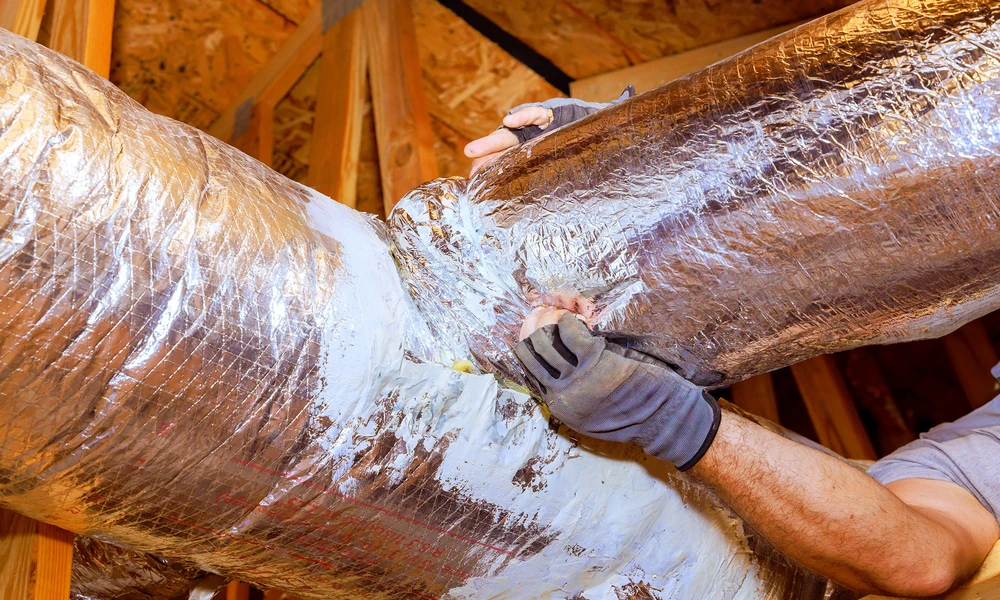
And here’s the part that surprises people. Your ductwork lives up there too. Those flexible silver tubes snake through the hot cavity, carrying cooled air that gets reheated before it ever reaches a register. You’re paying to cool air that warms up before delivery. That’s not a theory. It’s a measurable loss that shows up on your monthly statement.
How Much Heat Is We Actually Talking About
Let’s get specific about the numbers, because vague warnings don’t change behavior. A study from the Florida Solar Energy Center found that roof temperatures in summer can exceed 170 degrees on dark shingles. Your attic air will run 30 to 40 degrees hotter than the outside temperature, which means a 95 degree afternoon easily produces a 130 degree attic.
That heat does more than make you uncomfortable. It directly attacks the efficiency rating of your cooling equipment. Every air conditioner has a designed operating range, and when the air around it gets extreme, the compressor works harder to reject heat. The system that rated 16 SEER on a test bench performs closer to 12 in your real-world attic conditions.
The Environmental Protection Agency keeps data on this through their ENERGY STAR program. Their home upgrade guidance points to attic sealing and insulation as one of the most cost-effective improvements for reducing cooling load, typically paying for itself faster than equipment upgrades alone.
I’ve seen this play out in real homes. Two identical houses on the same street, same floor plan, same AC unit. One has a sealed and insulated attic. The other has bare rafters and gaps around the hatch. The second house runs its AC about 20 percent longer every day. That’s not a small difference.
Why Your Ductwork Makes It Worse
Here’s a detail most people miss. The ducts in an unconditioned attic aren’t just sitting there. They’re actively losing your cooled air through leaks, and those leaks pull in hot attic air to mix with what’s left.
A typical home loses 20 to 30 percent of its conditioned air through duct leaks before it reaches the living space. In an attic that’s 130 degrees, that loss gets worse because the temperature difference between the duct surface and the surrounding air is massive. Cold duct, hot attic, constant heat transfer.
The fix isn’t exotic. Sealing duct joints with mastic and wrapping them in insulation rated for your climate makes a visible difference. If you can see daylight through a duct connection, that’s a problem you can solve in an afternoon with a brush and a bucket of sealant.
And if you’re thinking about a system upgrade anyway, this is the moment to get the attic right first. Installing new equipment into a poorly insulated attic is like buying a sports car and driving it with the parking brake on. The National Association of Home Builders has documented that proper attic insulation is one of the top features homebuyers look for, which means it pays off on both your energy bill and your resale value.
What Actually Works: A Practical Fix List
You don’t need a full remodel to make a dent in this problem. Here’s the order I’d tackle it in, based on what moves the needle most per dollar spent.
Seal the air leaks first. Before you add insulation, stop the airflow. Gaps around pipes, wires, and the attic hatch are the biggest culprits. Caulk and foam sealant handle most of this in a weekend. The attic hatch itself needs weatherstripping and a cover that actually seals when closed.
Add insulation to the floor of the attic. This is the barrier between the hot cavity and your living space. Most older homes have less than the current recommended level. Adding blown-in cellulose or fiberglass is a straightforward job that a contractor can finish in a day, and you’ll feel the difference in your upstairs rooms almost immediately.
Insulate the ductwork. If your ducts run through the attic, wrap them with insulation rated for your climate zone. This keeps the cooled air cool from the air handler to the register. Check the connections for leaks while you’re at it.
Add a radiant barrier. A reflective layer under the roof deck bounces radiant heat back toward the shingles instead of letting it soak into the attic. This works best in hot climates and can lower attic temperatures by 5 to 10 degrees.
Consider a powered attic vent. If your attic has no ridge venting and no gable vents, a thermostat-controlled fan can pull hot air out during peak hours. This isn’t a replacement for sealing and insulating, but it helps when the attic is truly trapped.
One thing I’d skip? Those cheap solar attic fans from the big box store. They move some air, but they often pull conditioned air out of your living space through ceiling gaps, which makes things worse. Seal first, then vent.
When to Call a Professional
There’s a line between weekend DIY and calling in the crew. If your attic has vermiculite insulation, stop touching it and get a professional assessment before you disturb anything. If you’re not comfortable crawling through tight spaces with a caulk gun in 130 degree heat, this is a job worth paying for.
The same goes for anything involving your ductwork connections to the air handler. A mistake there creates pressure imbalances that make your system work harder, not less. And if your AC unit itself is getting old, this is the moment to think about the whole system together.
For homeowners in dry, hot climates, the combination of an older unit and an unconditioned attic is the classic recipe for a mid-summer breakdown. That’s exactly the scenario where a full replacement makes sense, and it’s why many people look into AC unit installation in Albuquerque when they finally see the energy bills pile up. Installing new equipment alongside proper attic treatment gives you the full benefit of both investments.
The Bottom Line
Your attic is probably costing you more than you think. It’s not glamorous, it’s not visible from the curb, and nobody posts about it on social media. But the numbers are real. A hot attic makes your AC run longer, work harder, and wear out sooner.
The good news is that most of the fixes are cheap, fast, and don’t require a contractor. Sealing gaps costs less than a tank of gas. Adding insulation pays for itself in a season or two. And your AC unit, whether old or new, will finally get to run the way it was designed to.
So the question isn’t whether your attic is affecting your cooling. It’s whether you’re willing to spend a Saturday fixing it, or another summer paying for the heat you’re letting in.