

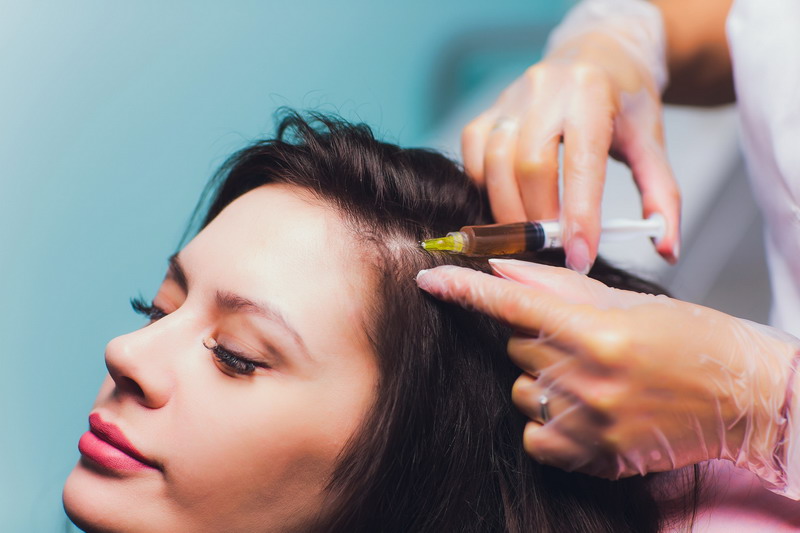
Boston 25 News recently ran a story explaining how doctors are using PRP therapy to treat women suffering from hair loss. The headline of the story described PRP therapy as a “unique treatment” but, is it really? That depends on how you define ‘unique’. One thing we can say for sure is that PRP is catching on among doctors and patients alike.
The Merriam-Webster online dictionary defines ‘unique‘ as “being the only one” or “being without a like or equal.” This definition certainly applies to PRP therapy in some respects. You could call it unique as a hair loss treatment because no other treatments currently on the market are similar to PRP in any way.
On the other hand, some people look at uniqueness as being equivalent to novelty. This is where the line gets drawn. PRP therapy is by no means a novel treatment. It has been used for years to promote wound healing and relieve the pain of osteoarthritis. In recent years it has been used by sports clinicians to treat musculoskeletal injuries.
Basics of PRP Therapy
The Advanced Regenerative Medicine Institute, a Salt Lake City organization that trains doctors in the proper application of PRP and stem cell therapies, says that the basics of PRP injections are pretty simple. To begin with, ‘PRP’ is an acronym that stands for ‘platelet-rich plasma’.
PRP contains a high concentration of blood platelets along with a variety of growth factors medical science has already proven are key to the healing process. It is believed that the combination of these platelets and growth factors is responsible for the benefits so many people derive from PRP injections.
We already know that platelets and growth factors are an integral part of the body’s natural mechanisms for healing injury. So common sense would seem to dictate that they would also be beneficial in helping the body to heal from all sorts of musculoskeletal injuries. But does this healing potential translate to hair loss as well?
PRP Therapy and Hair Loss
Hair loss is a problem that affects millions of people. Note that there are many causes of hair loss ranging from age to underlying medical conditions to the use of certain kinds of drugs. The type of hair loss treatable through PRP injections is known as androgenetic alopecia or, more commonly, male/female pattern baldness.
It’s generally accepted that alopecia is the result of two things. First is the inability of the scalp to replace lost hair as quickly as it did when the patient was younger. Second are physical changes to follicles that occur with age. Both are addressed with PRP therapy.
The same platelets and growth factors that can encourage the body to heal musculoskeletal injuries can also encourage hair growth. They engage the same repair mechanisms to make follicles more receptive to new hair and to tell the body to grow that hair.
Injections or Microneedling
So, how does it work? The procedure begins with a standard blood draw that takes only a few minutes. The blood is then spun in a centrifuge to isolate platelets and growth factors. Next, the resulting PRP material is applied to the affected area by way of either injections or microneedling. The entire process takes no more than a couple of hours per session.
Doctors and patients alike are discovering that PRP therapy is yet another alternative for treating hair loss. While it doesn’t work for everyone, it does work for a lot of people. It is definitely something to consider alongside pharmacological and surgical hair loss treatments.